
Penitents' Chapel in Mèze: History, Visiting & Thau Lagoon Views
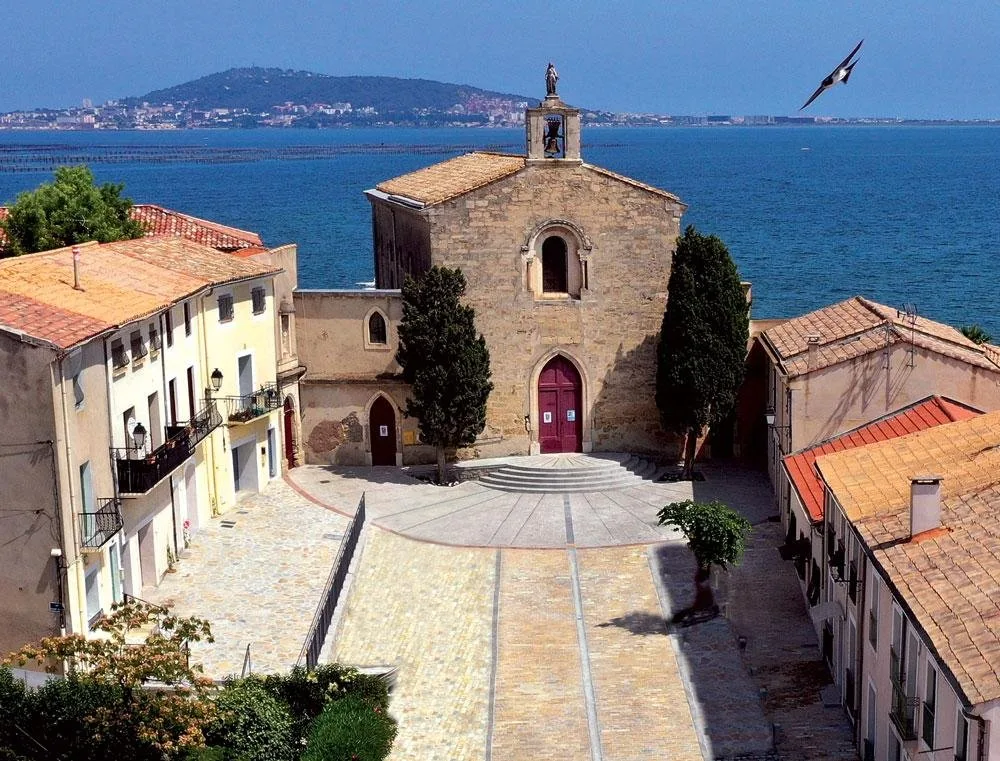
Overlooking the Thau Lagoon, the Penitents' Chapel in Mèze is one of the most emblematic historic monuments in the town's old centre. Its history dates back to the Middle Ages: construction of the present building began in 1147, on the foundations of an earlier place of worship.
Nearly nine centuries later, the chapel remains an inseparable part of the Mèze landscape. Its stone silhouette rises above the waterfront, while the surrounding area offers sweeping views across the lagoon, its oyster farms and, on a clear day, the town of Sète on the opposite shore.
The chapel's history is closely connected to the Brotherhood of the White Penitents, who were entrusted with the building in 1602. The chapel is also associated with the dedication Our Lady of Seven Sorrows. The brotherhood's long presence explains the name by which the monument is still known today.
But the chapel is more than a witness to the past. Restored over the years and still the subject of an important preservation programme, it also hosts concerts, exhibitions and cultural events. It is therefore an especially rewarding place for visitors wishing to explore Mèze, understand its heritage and enjoy the landscapes of the Thau Lagoon.
A Medieval Chapel Dating Back to the 12th Century
The history of the Penitents' Chapel in Mèze begins long before the arrival of the brotherhood that would eventually give the building its present name. An earlier place of worship already occupied the site when construction of the chapel we know today began in the 12th century.
The year 1147 is one of the main landmarks in its history. At that time, Mèze was a medieval settlement centred on its old town, immediately beside the Thau Lagoon. The chapel occupies a distinctive position, slightly elevated above the shore and facing the water.
This location still explains the close relationship between the monument and its surroundings. Unlike a historic building enclosed within densely built streets, the chapel opens directly onto the landscape. Its architecture, the square surrounding it and its immediate proximity to the waterfront give the site a particularly distinctive character.
Over the centuries, the building has naturally undergone several transformations. Religious practices evolved, alterations were made and successive maintenance and restoration campaigns changed certain parts of the monument without erasing its historic character.
A Monument Nearly Nine Centuries Old
The chapel visible today preserves the memory of many different periods. Its medieval construction, the presence of the White Penitents, successive architectural changes and more recent restoration work all provide an insight into several centuries of Mèze's history.
The Brotherhood of the White Penitents in Mèze
A decisive moment came in 1602, when the chapel was entrusted to the Brotherhood of the White Penitents of Mèze. From that time onwards, the history of the monument and that of the brotherhood became closely intertwined.
As in many towns across southern France, brotherhoods of penitents brought together laypeople who were involved in religious life as well as mutual assistance, charity and solidarity. They took part in religious ceremonies and contributed to various aspects of local community life.
In Mèze, the White Penitents played a role in the life and upkeep of the chapel. Their presence became deeply rooted in the memory of the site, to the point that the name Penitents' Chapel eventually became established. It remains the name used by local residents and visitors today.
The building is also associated with the dedication Our Lady of Seven Sorrows, known in French as Notre-Dame des Sept Douleurs. This name recalls its religious significance, while the name Penitents' Chapel reflects the human history of the monument and the brotherhood that occupied it.
Why Is It Called the Penitents' Chapel?
The name does not date back to the chapel's medieval origins. It comes from the long-standing presence of the Brotherhood of the White Penitents, who took over the building in 1602. More than four centuries later, the name remains inseparable from the monument.
Spectacular Views Over the Thau Lagoon
One of the greatest attractions of the Penitents' Chapel in Mèze is its location. Standing on a raised site above the shoreline, the chapel overlooks the Thau Lagoon and enjoys particularly open panoramic views.
From the area surrounding the chapel, visitors can admire the lagoon's waters, the oyster farming areas and the distinctive landscapes of this coastal environment. On a clear day, Sète can be seen on the horizon, on the opposite side of the lagoon.
This view is an essential part of the visit. It would be a shame to discover only the historic building without taking a few minutes to appreciate the scenery. The chapel's old stone architecture, the rooftops of Mèze, the small boats and the expanse of the lagoon together create one of the town's most characteristic panoramas.
Nearby, a statue of the Virgin Mary overlooking the lagoon is another recognisable feature of the landscape. Walking down towards the waterfront, visitors quickly reach Port des Nacelles, followed by the quays and other harbours of Mèze.
Inside the Penitents' Chapel in Mèze
After the bright panoramic views over the Thau Lagoon, the interior of the Penitents' Chapel in Mèze offers a very different atmosphere. Its light-coloured spaces, vaulted ceilings, high windows and historic furnishings recall the building's religious purpose, while revealing the changes made over the centuries.
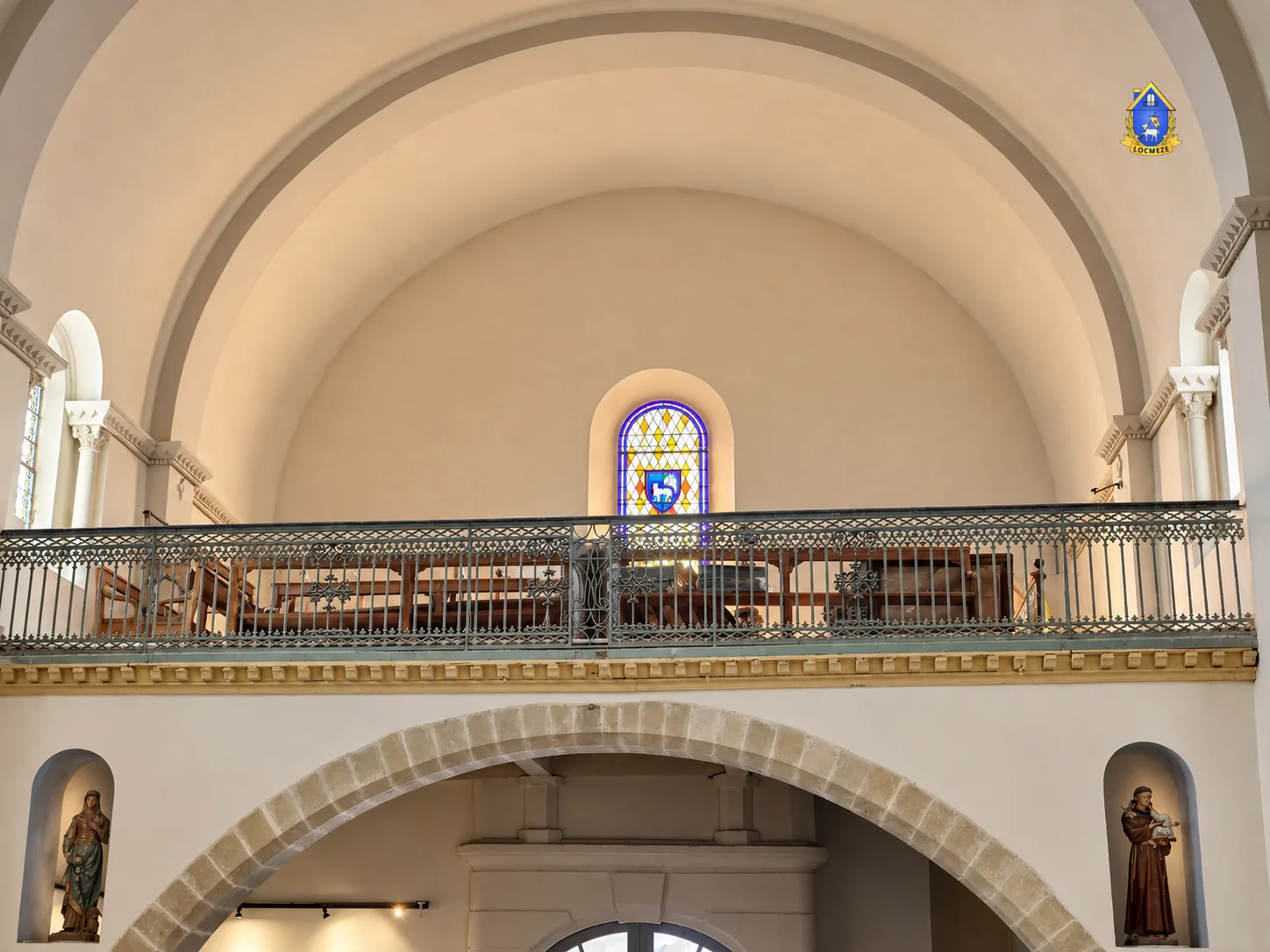
The nave is one of the most interesting parts of the chapel to explore. Its architecture is relatively simple, drawing attention to the building's proportions, the natural light entering through the windows and the historic features preserved inside.
This simplicity also contributes to the chapel's present-day cultural role. During concerts, exhibitions and other events, its interior provides a setting quite different from a conventional concert hall or exhibition space.
The Wooden Choir Stalls
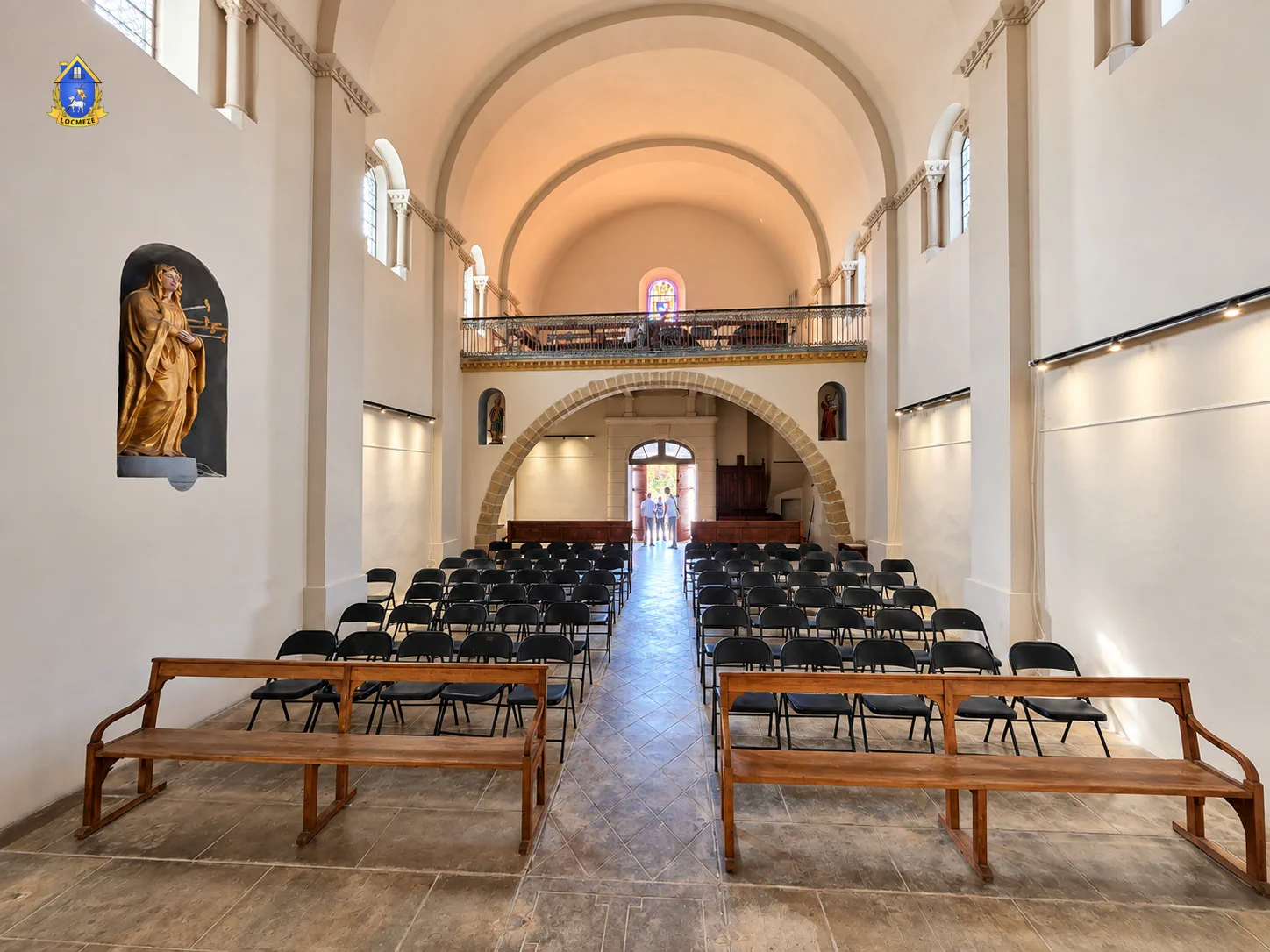
In the chancel, the wooden choir stalls are among the most remarkable features of the chapel's interior. Arranged in a curved formation around the central space, they contrast with the pale stone of the apse walls.
The crucifix at the centre, the wooden furnishings and the stained-glass windows form an ensemble worth examining when the chapel is open to visitors. These features recall the building's long religious history and the presence of the Brotherhood of the White Penitents.
The Interior Gallery
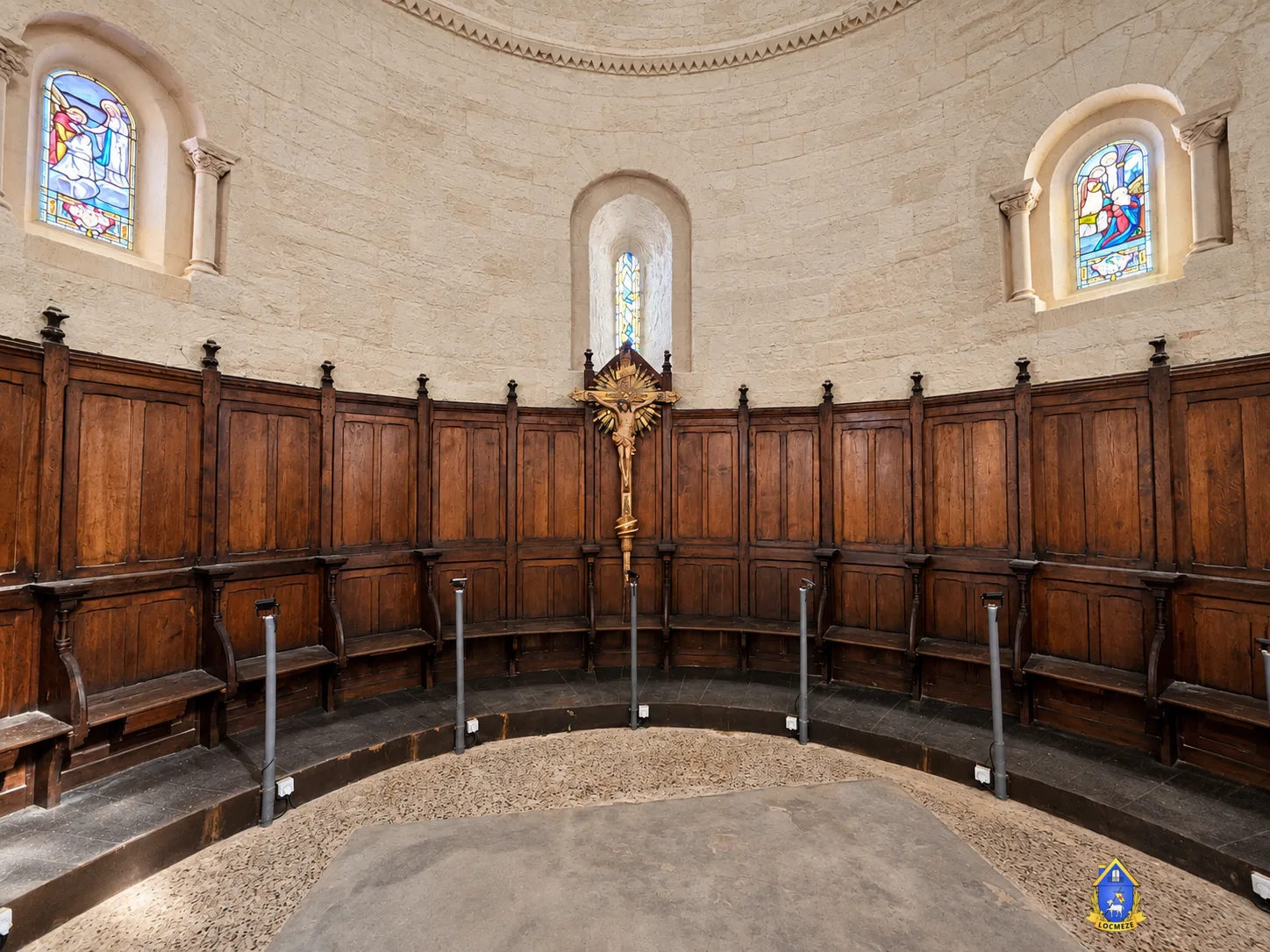
At the opposite end of the nave, the interior gallery overlooks the chapel entrance. Its metal structure, positioned beneath the great vaults, is another distinctive architectural feature of the building.
The stained-glass window aligned with the gallery adds a touch of colour to an interior dominated by stone and pale plaster. This viewpoint also helps visitors appreciate the height of the nave and the overall proportions of the chapel.
Restoration of the Penitents' Chapel in Mèze
Although it has stood in the Mèze landscape for almost nine centuries, the chapel has naturally suffered from the effects of time and exposure to the weather. Its position immediately beside the Thau Lagoon makes the conservation of its stonework, roof and façades particularly important.
During the 2010s, the condition of the building called for an extensive restoration programme. In 2017, a detailed assessment estimated that approximately €278,000 of work was needed at that time to preserve the chapel.
Faced with the scale of the project, the association Les Amis des Pénitents de Mèze became actively involved in safeguarding the monument. Working with the Fondation du patrimoine, the French heritage foundation, fundraising campaigns and other initiatives were organised to help finance the restoration.
This local mobilisation gained national recognition in December 2018, when the chapel was selected as the designated heritage site for the Hérault department under France's Mission Patrimoine, an initiative associated with Stéphane Bern. The chapel consequently benefited from the French heritage lottery, known as the Loto du patrimoine, as well as greater public awareness of its preservation needs.
The first phase included structural reinforcement, restoration of the roof and work on the exterior walls.
A subsequent phase focused on the interior spaces, with work carried out in the nave and chancel.
The third phase aims to restore the west façade, where the stonework, render and joints have suffered significant deterioration.
Restoration Work Continuing in 2026
The work already completed has helped preserve much of the monument, but the chapel's restoration programme has not yet been fully completed.
A new fundraising campaign for the complete restoration of the west façade was launched in September 2024.
According to information published by the Fondation du patrimoine, work on this third phase had not yet begun as of August 2026. At that time, fundraising was still under way to secure the financing needed for the next stage.

Help Preserve the Penitents' Chapel
The association Les Amis des Pénitents de Mèze continues its efforts to preserve and promote this important historic monument.
To learn more about current initiatives and opportunities to support the restoration, contact the association at: lespenitents.meze@gmail.com .
Visiting the Penitents' Chapel in Mèze: Concerts, Exhibitions and Heritage
Visiting the Penitents' Chapel in Mèze is about more than discovering a historic monument. Today, the chapel is also an active cultural venue, regularly used for exhibitions, concerts and heritage events.
Its architecture and acoustics give events held inside a distinctive atmosphere. The great vaults of the nave, pale walls, stained-glass windows and historic furnishings provide a setting quite different from a conventional concert hall or exhibition space.
During the summer season, the chapel hosts various cultural events. It also participates in some of the main events organised in Mèze, including the Journées européennes du patrimoine (European Heritage Days; article in French). These events provide a valuable opportunity to discover or rediscover the building and its history.
Can You Visit the Chapel All Year Round?
The chapel does not necessarily have the same opening hours throughout the year. Access may vary depending on the season, exhibitions, concerts and other events taking place inside the building.
If you would like to see the interior, it is therefore advisable to check the opening arrangements before your visit. The chapel's exterior and the panoramic views over the Thau Lagoon remain worth discovering even when the building is closed.
What to See Near the Penitents' Chapel
A visit to the chapel fits naturally into a walking tour of the historic centre of Mèze. Several interesting places are only a few minutes away, making it easy to combine historic heritage, harbours, beaches and Thau Lagoon scenery during a single walk.
The first place to discover lies almost immediately below the chapel: Port des Nacelles. Smaller than Mèze's main harbour, it has a very different atmosphere and is one of the most picturesque spots along the waterfront.
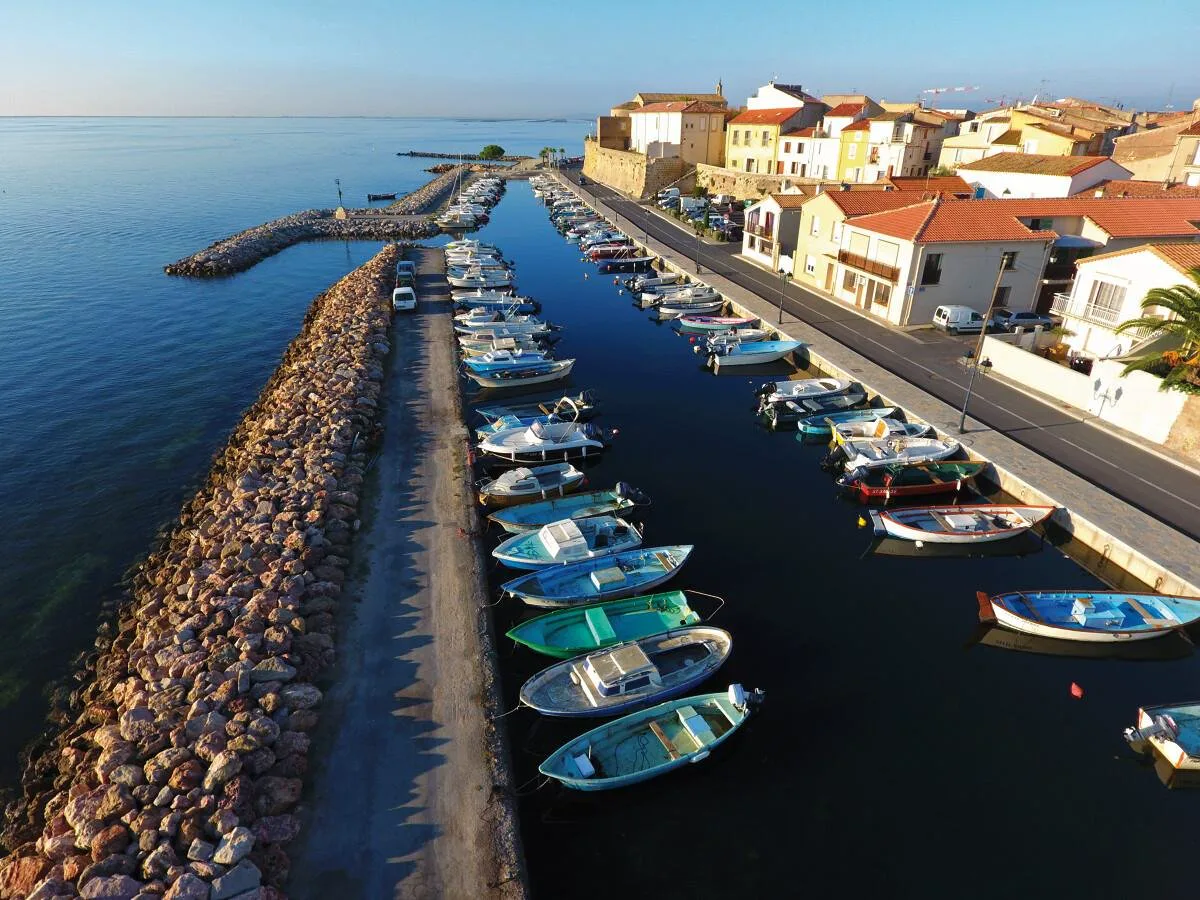
The harbour takes its name from the small boats traditionally used by fishermen on the lagoon. Several boats are still moored in this narrow basin, protected by a long stone breakwater.
From Port des Nacelles, simply continue along the waterfront to reach the quays, Mèze's main harbour and then the beaches of Mèze .
A small traditional fishing harbour located directly below the chapel.
The waterfront quays, boats and restaurant terraces are easily reached by continuing the walk. Explore Mèze Harbour .
Returning towards the old town, you can continue your visit to Église Saint-Hilaire (article in French).
The Château de Girard and its park offer another opportunity to discover the heritage of Mèze. Article in French.
Just a few minutes away on foot, the historic centre also provides access to the covered market hall, the Esplanade and the old streets of Mèze. The concentration of attractions within a relatively small area means that a car is unnecessary for much of a visit to the town centre.
Discover Mèze and the Thau Lagoon on Foot from the Chapel
Thanks to its location between the historic centre and the waterfront, the Penitents' Chapel is an excellent starting point for exploring Mèze on foot.
Within just a few minutes, you can move from a medieval monument to the small fishing boats of Port des Nacelles, before continuing towards the main harbour, the beaches or the narrow streets of the historic centre.
This walk helps visitors understand what makes Mèze distinctive: the town's historic heritage is closely connected to its maritime environment. Ancient monuments, harbours, traditional houses and landscapes of the Thau Lagoon follow one another over relatively short distances.
An Easy Walk to Extend
From the chapel, walk down to Port des Nacelles and continue along the lagoon towards the main harbour. Then head back towards the historic centre to discover the covered market hall, the Esplanade, Saint-Hilaire Church and Château de Girard.
Depending on how much time you have available, you can extend the walk towards the beaches or explore other parts of the lagoon waterfront.
A Worthwhile Visit Even When the Chapel Is Closed
If the interior is not accessible during your visit, the site is still well worth discovering. The exterior architecture, the surrounding square, the panorama over the Thau Lagoon and the walk down to Port des Nacelles already make this a memorable stop while exploring Mèze.
Continue Exploring Mèze
After visiting the Penitents' Chapel, discover more historic monuments, scenic walks and must-see places to continue exploring Mèze and the Thau Lagoon.